
Person schema is the markup that tells search and AI engines each of your attorneys is a real, credentialed individual: their name, title, credentials, the firm they work for, and what they know. It lives on each attorney's bio page, and it's the schema type most closely tied to authority, because it turns your named experts into something a machine can actually read and connect to the firm. Most law firm sites skip it, which is a missed chance to make the people behind the work legible.
Here's what Person schema is, what to put in it, and how it fits the rest of your markup.
What is Person schema and where does it go?
Person is the schema.org type for an individual human, and on a law firm site it belongs on each attorney's bio page, describing that lawyer. Where LegalService describes the firm as an entity, Person describes the people inside it, one block per attorney, on the page dedicated to them.
The distinction matters because a firm and a person are different things, and engines treat them differently. Your homepage marks up the firm; each attorney bio marks up the human. The Person type, defined by schema.org, has properties built for exactly this: a name, a job title, credentials, an employer, an area of knowledge, and links to the person's other verified profiles. Put a Person block on each bio page and you've told the engine, in a vocabulary it already understands, that these are the real, named individuals doing the legal work.
Why does Person schema matter for a law firm?
Because it makes your named, credentialed experts machine-readable, which is the heart of the authority signal. Google's quality framework rewards content attached to identifiable experts, and AI engines lean toward sources they can verify are real. Person schema is how you hand both of them a structured statement of who your attorneys are and why they're qualified, instead of hoping they infer it from prose.
This connects directly to the authority work that actually earns citations, which we lay out in how attorneys build the authority AI engines actually cite. Named authorship with real credentials is the single highest-return authority move a firm can make, and Person schema is the markup layer underneath it. It won't manufacture authority you don't have, but where you do have it, real bar admissions, a real law degree, real experience, Person schema makes that legible rather than leaving it as unstructured text an engine has to guess at. It's the difference between claiming expertise in a paragraph and stating it in a format built to be read.
What should attorney Person schema include?
The properties that establish who the lawyer is, where they work, and what they're qualified in. At minimum: name, job title, and the firm they work for. Beyond that, the credentials and connections that prove expertise, so the block reads as a real, verifiable professional rather than a name.
The useful properties for an attorney, in plain terms:
- name and jobTitle, the attorney's full name and role (Partner, Associate, Managing Attorney).
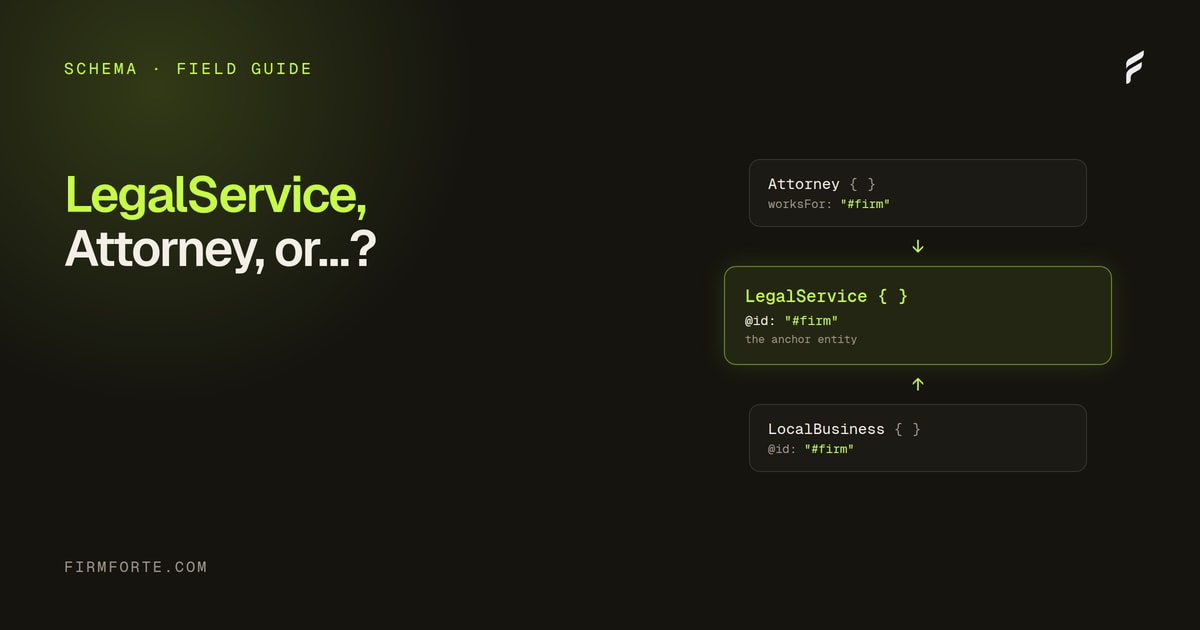
- worksFor, a link to the firm's LegalService entity, tying the person to the practice.
- alumniOf, the law school and any other relevant institutions.
- knowsAbout, the practice areas the attorney actually handles.
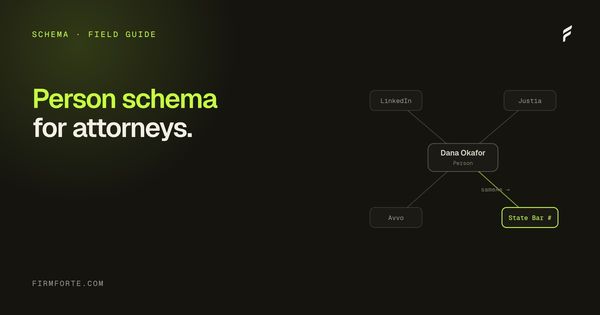
- sameAs, links to the attorney's verified profiles: their state bar listing, LinkedIn, published work. This is how an engine corroborates the person is real.
- image and description, a real photo and a bio that matches the page.
Mark up only what's true and what appears on the page. The sameAs links matter most for authority, because pointing to an official bar profile is external corroboration that this attorney exists and is licensed.
How does Person schema connect to the firm's other markup?
Through the worksFor link back to your LegalService entity, which stitches the people to the firm in one connected graph. Instead of a floating Person block and a separate firm block that don't reference each other, you link each attorney's worksFor to the firm's @id, so an engine reads a single structure: this firm, staffed by these named, credentialed people.
That connectedness is the point of doing schema properly rather than in disconnected pieces. The firm entity, the attorney Person blocks, the practice-area LegalService markup, and the rest all reference each other, which we lay out in the seven schema types every law firm website needs, and the type choices behind it in LegalService vs Attorney vs LocalBusiness schema. Person schema is one node in that graph, and it's the one that carries the human authority. Linked correctly, your named experts and your firm reinforce each other in a way an engine can follow.
Does Person schema get you cited or ranked?
No, and the same honest caveat applies here as to every schema type: it's hygiene and legibility, not a lever that makes an engine cite you. Person schema makes your attorneys' real credentials machine-readable and eligible to be understood. What actually earns authority is the underlying truth, real bar admissions, real experience, real off-site corroboration, and the content those experts produce. The markup describes the expertise; it can't invent it.
So treat Person schema as the structured layer under genuine authority, not a substitute for it. A firm with real, credentialed attorneys and clean Person markup is making its authority legible. A firm with thin credentials and perfect markup is still thin; the schema just accurately describes not much. Do the real authority work, then mark it up so the engines can read it cleanly. The one supports the other, and neither replaces it.
How do you build and test attorney Person schema?
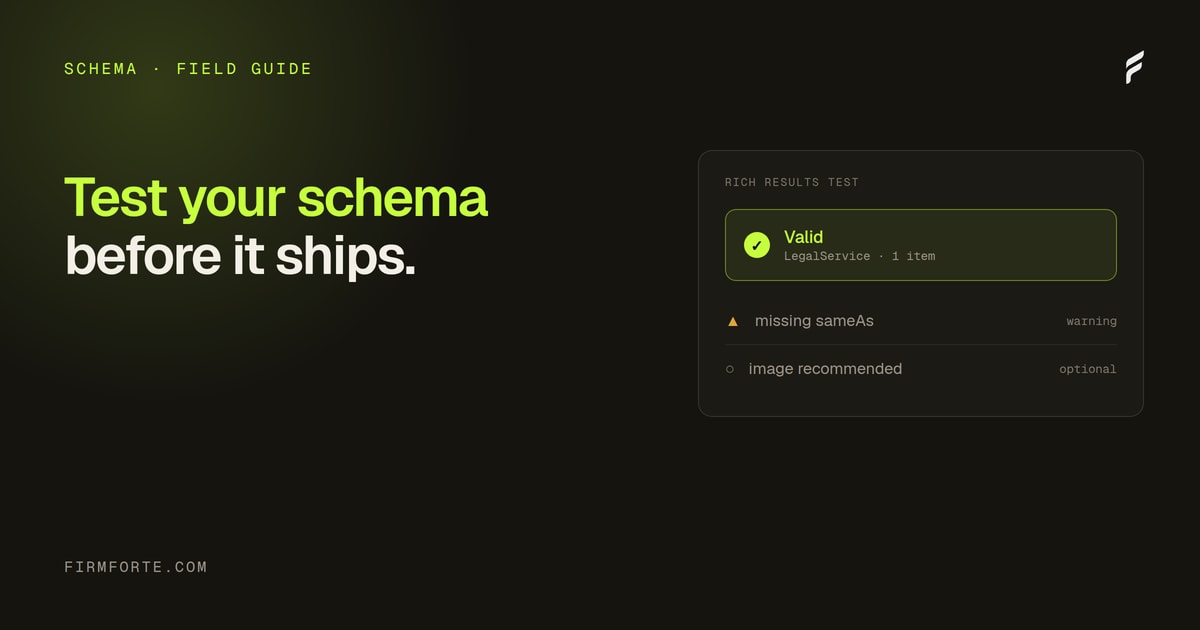
Generate it, validate it, and confirm it renders on the live page. Our law firm schema generator can build clean markup to start from, the schema.org validator and Google's Rich Results Test confirm it parses, and a crawler's-eye view verifies it's actually present in the served HTML. Person schema fails the same silent ways any markup does, so run the same checks.
The full pre-launch routine, including the check that catches markup living in a plugin but never rendering to the page, is in how to test your law firm schema before it goes live. Add Person markup to each attorney bio, link each one to the firm, fill it only with true and on-page information, then validate and confirm it renders. To have your attorney pages audited on your live site, the free audit includes a schema check, and every site we build ships with the full connected set, Person blocks included, through our AEO service.