
For about 20 years, "search marketing" meant one thing: get your law firm onto page one of Google for as many practice-area queries as possible. The page was a list of ten blue links, and your job was to land on it.
That page no longer looks the same. Most legal queries now return an AI-generated answer at the top, followed by the traditional blue links underneath. The answer is what the searcher reads. The links are what they click if the answer didn't satisfy them.
The discipline that targets the answer is called Answer Engine Optimization (AEO). The discipline that targets the links is still called SEO. Both still matter. Neither is obsolete. But they need to be understood as different jobs, with different mechanics.
The short definitions
SEO (Search Engine Optimization) is the practice of getting a webpage to rank in the organic blue-link results for relevant queries.
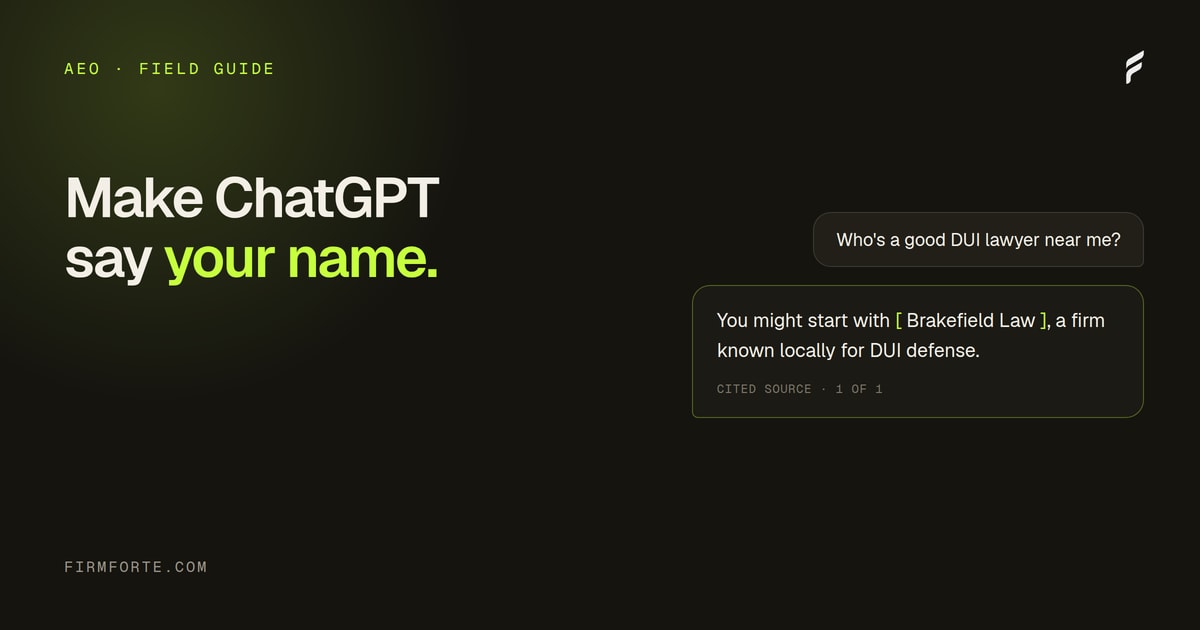
AEO (Answer Engine Optimization) is the practice of structuring a webpage so that AI search engines — ChatGPT, Perplexity, Google AI Overviews, Bing Copilot — cite it as a source when generating their answer.
The same content can win both. But the work you do to optimize for each is different.
Side by side
| Dimension | SEO | AEO |
|---|---|---|
| Target | Blue-link rankings | AI citations in generated answers |
| Primary engines | Google, Bing | ChatGPT, Perplexity, Google AI Overviews, Bing Copilot |
| Measured by | Position, traffic, clicks | Citation rate, brand mentions, referral traffic |
| Content format | Long-form pages targeting keyword clusters | Direct Q&A, well-structured passages, schema |
| Tone | Comprehensive, sometimes verbose | Conversational, definite, self-contained |
| Backlink role | Critical for authority | Important but less direct; entity signals matter more |
| Time to impact | 6–12 months | 30–90 days for technical lift, 6+ months for citation depth |
| Measurement tools | Search Console, Ahrefs, Semrush | Manual prompts, Profound, Athena HQ, Otterly |
Where they overlap
The good news is that SEO and AEO share most of their plumbing. If you do classical SEO well, you've already done 60% of the AEO work without realizing it.
Shared foundations:
- Site speed and Core Web Vitals. Slow sites get crawled less by both Google and the AI engines.
- Crawlability. Both worlds need clean URLs, proper sitemaps, sane
robots.txtrules (though AEO needs you to allow the AI bots specifically). - Schema markup. Useful for traditional rich results, essential for AI citation.
- Authoritative, accurate content. Both reward expertise. Neither rewards fluff.
If you're already invested in SEO, the migration to AEO is incremental, not a rebuild.
Where they diverge
Three places the disciplines pull in different directions:
1. Content format
SEO rewards comprehensive long-form pages — the 3,000-word "ultimate guide to DUI defense in Texas." AEO rewards passages within content that are short enough to be lifted whole. A 60-word answer to "What's the penalty for a first DUI in Texas?" is more citable than a 3,000-word essay where the same fact is buried in paragraph 14.
You don't have to choose. You write the long-form page and structure it so that crisp, self-contained answers live near the relevant headings. AEO is a structural discipline applied to SEO content, not a replacement for it.
2. Tone
SEO content that hedges ("penalties may vary depending on circumstances...") tends to rank fine. AEO citations require commitment. AI engines preferentially cite passages with definite statements. "A first DUI in Texas carries..." wins over "A first DUI might result in..."
This is, incidentally, why many compliance-conscious law firms underperform in AEO. The very hedging that protects against bar advertising violations is exactly what AI engines deprioritize. Resolving this requires writing content that is both definite and compliant — which is possible, but takes craft. ABA Rule 7.1 doesn't require hedging; it requires accuracy.
3. The entity layer
SEO has historically rewarded sites with strong page-level signals: lots of backlinks pointing to a specific page, lots of internal links from related pages. AEO rewards entity consistency. Your firm name, address, attorney bios, areas of practice — all need to match across your site, your bar listings, your Avvo and Justia profiles, your Google Business Profile, and any press mentions.
Many firms have decent SEO but terrible entity consistency. They show up in rankings but never get cited as an authoritative entity because no one engine can confirm which "Smith & Johnson Personal Injury" they're looking at.
How law firms should think about budget allocation
Three honest scenarios:
If you have an SEO retainer already: add 20% to your scope of work for AEO. The agency should be able to absorb most of it within existing hours, because the underlying schema, content structure, and entity work overlaps.
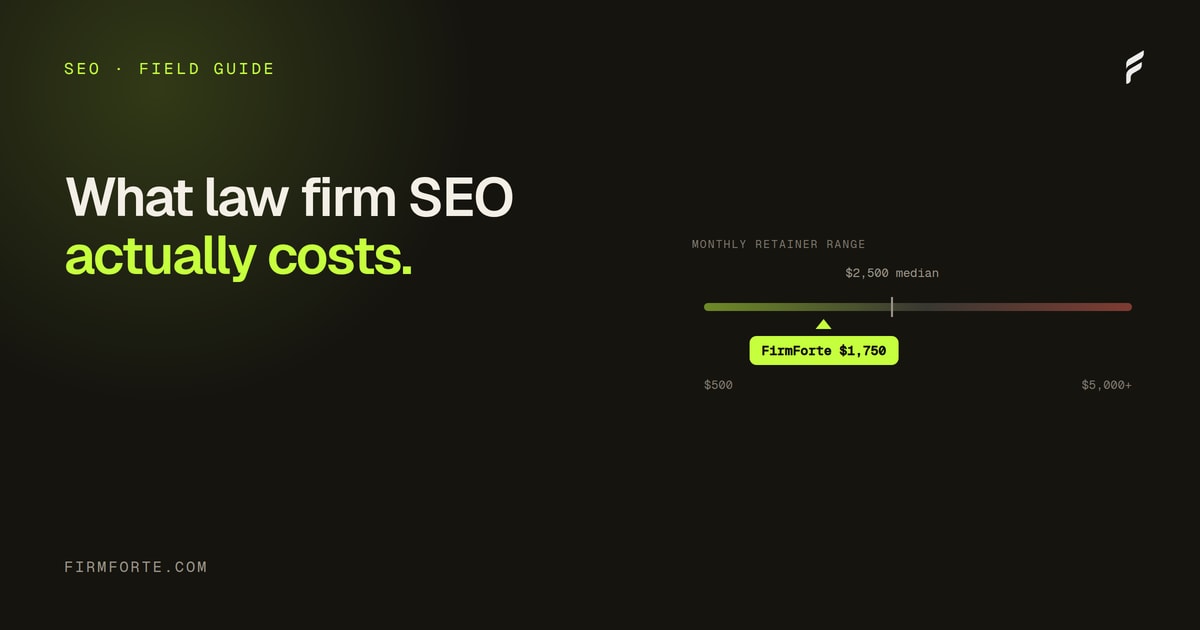
If you have no SEO yet: start with an AEO-first foundation. Schema, conversational FAQ, entity consistency, clean technical SEO. Don't let an agency sell you "AEO" as a separate $4,000/month line item; it's not a separate service, it's a way of doing the same work.
If you only had paid ads: the math gets interesting. AI Overviews are eroding click-through rates on classical paid results too. Building organic AEO presence is increasingly defensive, not just offensive.
Three things you can do this week
If you want to start moving on AEO without spending money:
- Check your
robots.txtand confirm you're not blocking GPTBot, ClaudeBot, PerplexityBot, or Google-Extended. If you are, that's likely the single largest issue. - Audit one practice-area page for schema and FAQ structure. Add
FAQPageschema with 5 to 8 real client questions if it's not there. - Manually prompt ChatGPT, Perplexity, and Google AI Overviews with your top 5 target queries this week. Document who gets cited. That's your baseline.
None of this requires hiring anyone. But it makes the conversation with an agency (or with us) much sharper, because you'll know what you're paying for.
The honest summary
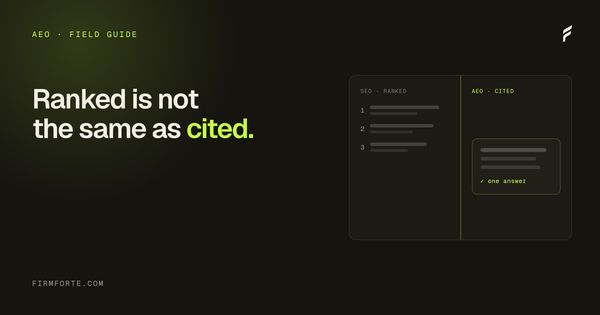
SEO and AEO aren't replacing each other. They're layering. SEO gets you on the page. AEO gets you named in the answer. For most law firms in 2026, those are now equally important — but most agencies are still selling 2019's playbook.
The firms winning the next decade of legal marketing are the ones structuring their content for both at once, with the same hours, the same retainer, and the same content team. That's the bet behind everything FirmForte builds: SEO for law firms and AEO for law firms as one scope of work, not two line items. If you want the AEO half in full, from what gets cited to how to measure it, start with the complete guide to AEO for law firms.