
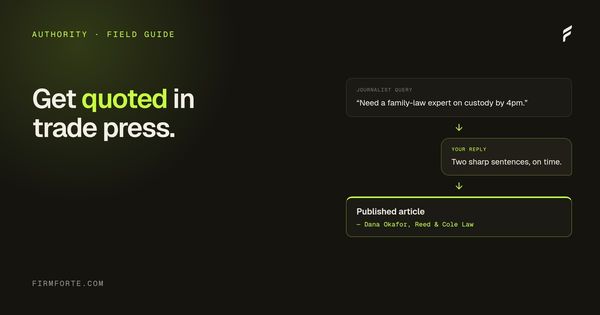
Getting quoted in the press means being a fast, useful source for the journalists already hunting for legal experts, and it's one of the most valuable authority signals a firm can build. But the tool nearly every guide still tells you to use for it, HARO, shut down at the end of 2024. If you've been trying to sign up for it, that's why it isn't working. Here's what actually works now, and how to be the attorney a reporter picks.
This is a practical follow-on to the authority work: earned mentions on publications you don't own are exactly the kind of corroboration that builds the reputation both Google and AI engines reward.
Why does getting quoted matter for a law firm?
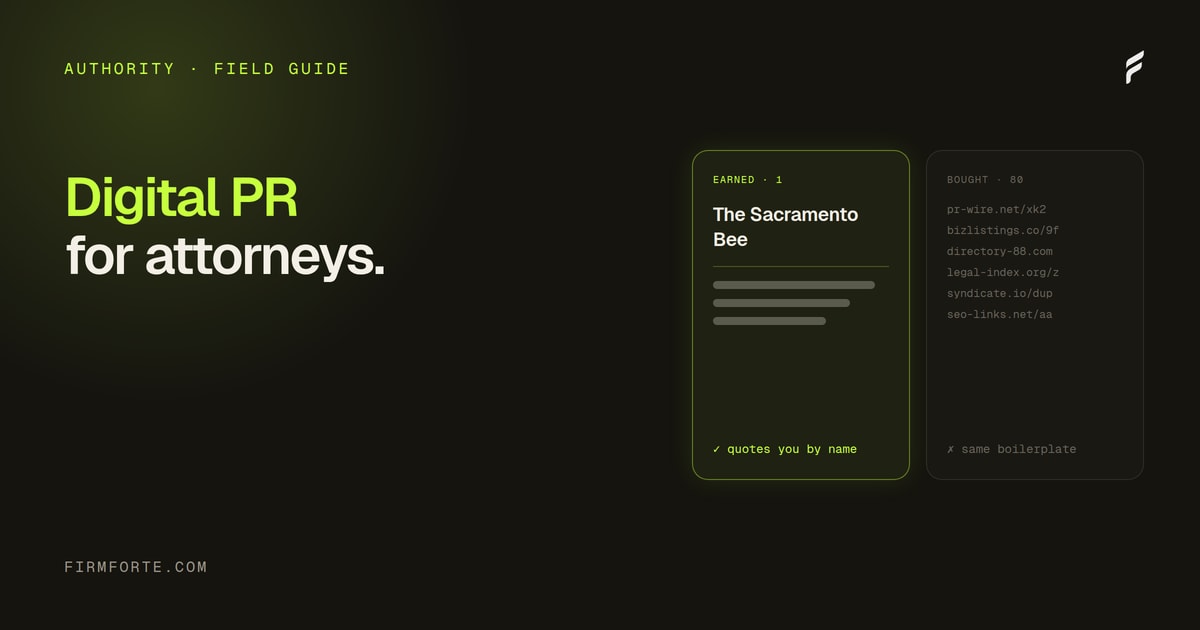
Because a named mention on a publication you don't control is a genuine authority signal, and authority is what turns a claim of expertise into a recognized one. When a journalist quotes you by name in an article, you've earned a piece of third-party validation that no amount of self-published content can manufacture. It's the difference between saying you're an expert and having someone independent treat you as one.
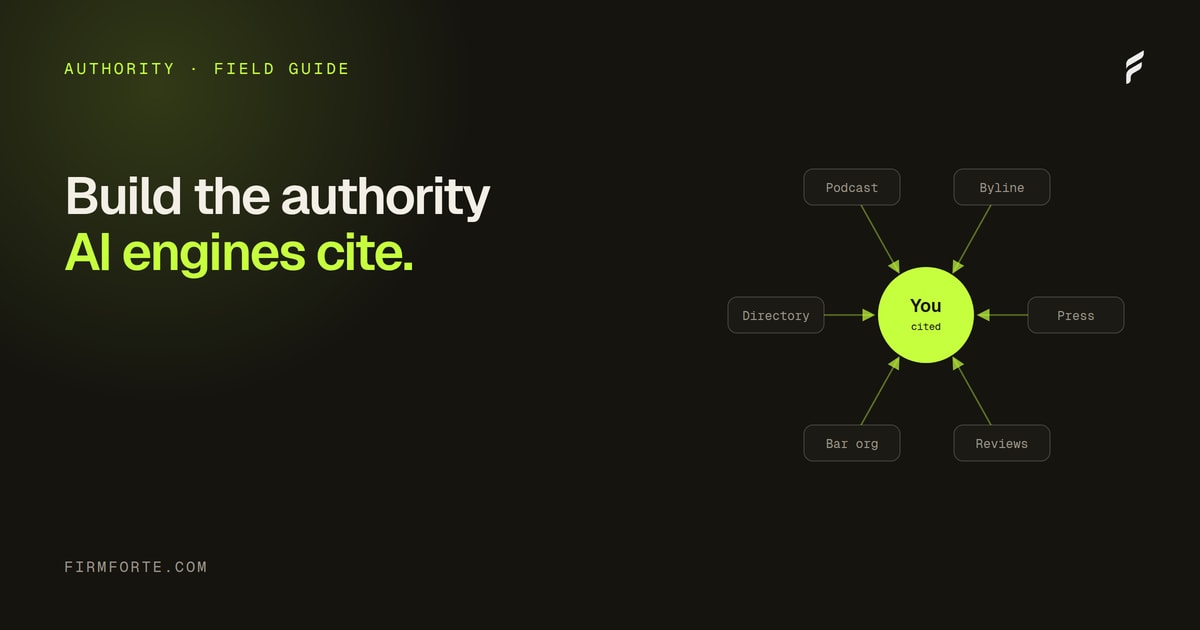
That validation does double duty in 2026. It builds the off-site reputation that supports your E-E-A-T, and it's the kind of external corroboration AI engines lean on when deciding whether a firm is a real, citable source, which we lay out in full in how attorneys build the authority AI engines actually cite. A quote in a legal trade outlet or a local business journal is a small, durable vote that you're the real thing, and enough of those votes, from enough independent directions, is what separates a firm engines trust from one they skip.
Isn't HARO the way to do this?
Not anymore. HARO, which stood for Help A Reporter Out and had been rebranded as Connectively, shut down on December 9, 2024, as its owner Cision folded the service into a different platform. So the single most-recommended tool for source-to-journalist connections, the one at the center of nearly every "how to get press" guide written before 2025, no longer exists.
This matters because the internet is full of outdated advice that still points you at a dead service, and following it wastes the time you'd spend actually getting quoted. If a marketing plan hands you "sign up for HARO" as a step, that plan is at least a year stale, and it's worth wondering what else in it is. The good news is that the model HARO pioneered, journalists posting requests and experts responding, didn't die with it. It scattered across several successors, and you can work them the same way.
So what actually works now?
A handful of live platforms that do what HARO did, worked in parallel. Most people who take this seriously run several at once, because each surfaces different requests. The main ones as of 2026:
- Featured.com picked up the HARO name and runs it again as a free email digest connecting vetted experts with publishers looking for quotable answers.
- Qwoted connects journalists with verified experts and requires verification on both sides, which cuts spam. The free plan allows a couple of pitches a month; the paid plan runs about $99 a month for unlimited.
- Source of Sources (SOS) was built by Peter Shankman, the person who created HARO in the first place, after Connectively closed. It's free and runs on an honor system: pitch off-topic and you're out.
- SourceBottle and a few others round out the field, each with its own mix of outlets and beats.
The 2026 successor landscape is well mapped in roundups like Prezly's guide to HARO alternatives. Pick two or three, watch for the legal and local-business queries, and treat it as a standing habit rather than a one-time signup.
How do you write a response that gets picked?
Fast, on-topic, quotable, and human. A journalist working a request is on a deadline and drowning in pitches, so the response that wins is the one that's already usable: a tight, plain-English answer to exactly what they asked, a sentence of specific insight only a practicing lawyer would have, and a one-line credential so they can attribute it. No preamble, no marketing, no attaching your brochure.
The details that separate a picked pitch from an ignored one are small and consistent. Speed matters enormously, because reporters often use the first few good responses and close the request. Answering the actual question, rather than pivoting to what you'd rather talk about, matters just as much, since an off-topic pitch is an instant delete. Write it so a busy editor can paste your words straight into the piece, which means clean, quotable sentences and no jargon they'd have to translate. And lead with the specific, the real experience or number only you have, because generic advice that could come from any lawyer gives them no reason to pick you over the other forty responses.
What else builds trade-press authority?
Contributed writing and showing up as a real expert in your niche. Beyond answering journalist requests, you can pitch bylined articles to legal trade outlets and local business publications, be a genuinely useful podcast guest in your practice area, and build relationships with the local reporters who cover courts and business. Each is a different route to the same earned, off-site mention.
These compound with the reactive work of answering requests. A byline in a bar journal or a regional business paper, a podcast appearance where you actually teach something, a quote in the local paper's coverage of a legal development: each adds a piece of independent corroboration, and a year of them builds a web presence that says, from many directions, that you're an expert others turn to. The tactics sit alongside the ones in digital PR for attorneys, and they reinforce the attorney's own visibility, which is why they pair naturally with building a real personal brand. The point is consistency, not a single big placement.
How does this connect to getting cited by AI?
Off-site mentions are the corroboration engines look for, and they can't be faked. When an AI engine is deciding whether to cite a firm, it leans toward sources that show up, credentialed and consistent, across places the firm doesn't control. Press quotes are precisely that: independent references to your expertise that an engine can find and weigh. The more of them, the more you look like a real, verifiable authority.
The honest boundary stays the same one we hold everywhere: nobody can promise you a citation, and any agency that guarantees ChatGPT or Google will name your firm is selling something it can't deliver. What earned press does is make you the kind of source engines prefer, by building the external, credentialed reputation that authority is made of. It's slow, it's a habit rather than a campaign, and it can't be bought out from under you, which is exactly why it's worth the time. To see whether the engines currently treat your firm as a real source or skip past it, run the free audit, and the ongoing off-site work is the heart of our digital PR service.